
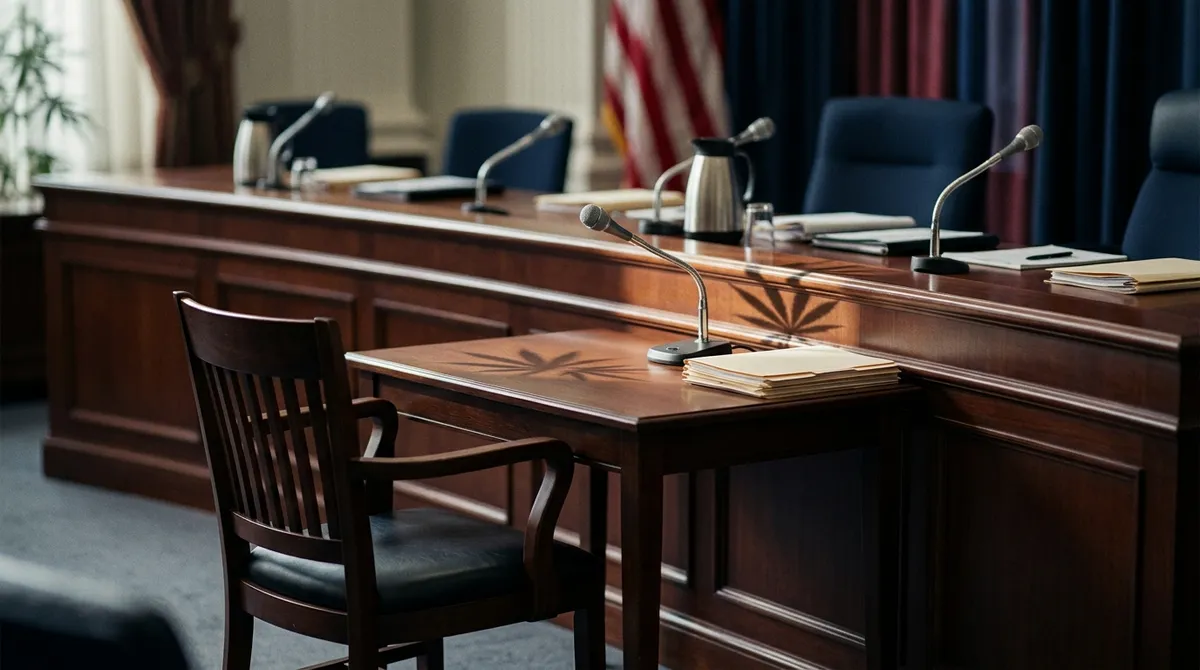
A Quiet Room Where a Big Decision Is Being Made
Somewhere in a federal hearing room, a process is underway that could quietly reshape the lives of millions of Americans — patients, small business owners, and everyday consumers who've watched cannabis laws evolve around them for decades.
On June 29, the Drug Enforcement Administration opened what's being called a historic hearing on a proposal to move cannabis from Schedule I to Schedule III under federal law. The hearing is set to run through July 15, and for many people who've followed drug policy for years, it feels like a moment they weren't sure would ever come.
But as with most things in Washington, the story is more complicated than the headline.
What Schedule III Would Actually Change
Right now, cannabis sits in the same federal legal category as heroin — Schedule I — meaning the government officially considers it to have no accepted medical use and a high potential for abuse. That classification has created enormous friction between federal law and the reality on the ground, where dozens of states have legalized cannabis for medical or recreational use.
Moving cannabis to Schedule III would be a significant symbolic and practical shift. According to reports, one of the most immediate effects would involve taxation. Legal cannabis businesses currently operate under a punishing section of the tax code — sometimes called 280E — that prevents them from deducting normal business expenses because they're technically selling a federally illegal substance. Rescheduling could change that, giving legal cannabis companies access to deductions that virtually every other business in America takes for granted.
For patients and consumers in legal states, rescheduling could also signal a broader normalization of cannabis at the federal level, potentially opening doors for more research and easing some regulatory burdens.
Why Advocates Say It's Not Enough
Here's where the story gets more layered.
Reform advocates — the people who've spent years pushing for cannabis legalization — are not entirely celebrating this moment. Their concern is that Schedule III still means cannabis remains a controlled substance under federal law. It wouldn't make it legal. It wouldn't expunge records. It wouldn't resolve the patchwork of state and federal rules that still creates problems for businesses, banks, and people.
For many in the reform community, the real goal has always been full descheduling — removing cannabis from the federal controlled substances list entirely. From that perspective, Schedule III can feel like progress that stops just short of what's actually needed.
There's also a concern about the hearing itself.
Who Gets to Speak
According to reports, reform advocates have raised objections that pro-cannabis voices were excluded from the testimony process. That's a significant grievance when the subject matter directly affects patients, legal business owners, and communities that have lived under cannabis prohibition for generations.
The question of who sits at the table during policy hearings is never just procedural. It shapes which stories get heard and which concerns get weight when decisions are finally made.
Interestingly, some supporters of rescheduling have offered a counter-argument: that keeping the hearing more limited in scope might actually help speed the process along. Broader testimony can mean longer timelines. In federal policy, faster isn't always better — but when an industry and its customers have been waiting decades, the appeal of moving quickly is understandable.
Decades in the Making
It's worth pausing to appreciate the scale of what's happening, even with all the caveats.
For most of living memory, federal cannabis policy was effectively frozen. While states moved, the federal government didn't. Dispensaries opened, medical programs expanded, tax revenue flowed — and yet at the federal level, cannabis remained in the same category it had been in since the early 1970s.
This hearing, whatever its limitations, represents one of the most consequential federal cannabis policy moments in decades, according to reports. The legal cannabis market has grown substantially across the country, and the gap between state law and federal law has become harder and harder to ignore.
The businesses operating in that gap, the patients relying on state-legal products, the workers whose livelihoods depend on an industry that federal law still technically doesn't recognize — they're all watching this process with something between cautious hope and practiced skepticism.
The Space Between Progress and the Finish Line
There's a particular kind of feeling that comes with watching something long-awaited finally begin to move — and realizing that the movement itself raises new questions. That's where a lot of people find themselves right now.
Schedule III might be a step forward. It might also be a place where momentum stalls. The hearing runs through mid-July, and the months that follow will say a great deal about whether this moment becomes a turning point or a footnote.
What seems clear is this: the conversation the country has been having about cannabis — in living rooms, in dispensaries, in courtrooms and statehouses — has finally made its way into a federal hearing room. What comes out the other side is still being written.